
Zero Budget. $100M in Data. The Most Audacious Data Grab in Tech History
Pokémon GO players unknowingly built a street-level 3D map of the world. Now it guides delivery robots - and here is what that means for freight forwarders.
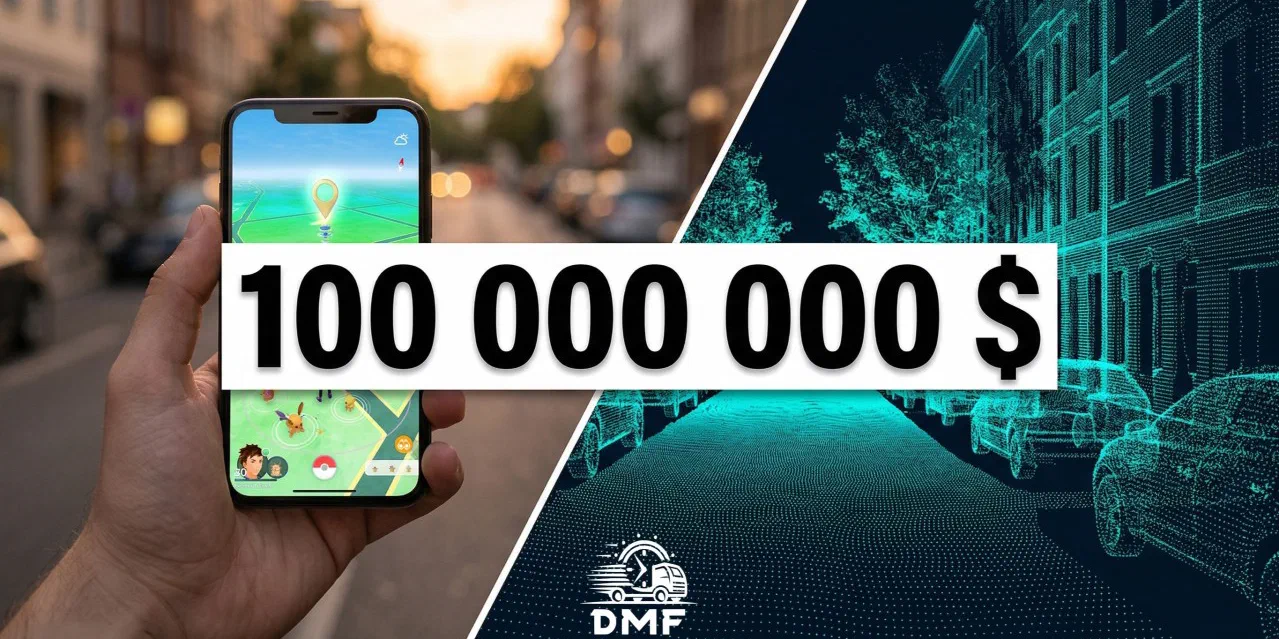
In 2016, millions of people walked their neighbourhoods hunting for virtual creatures on their phone screens. What none of them knew was that they were simultaneously building something far more valuable than a high score: a precise, ground-level, three-dimensional map of the inhabited world. That map is now being licensed to the robots delivering your parcels.
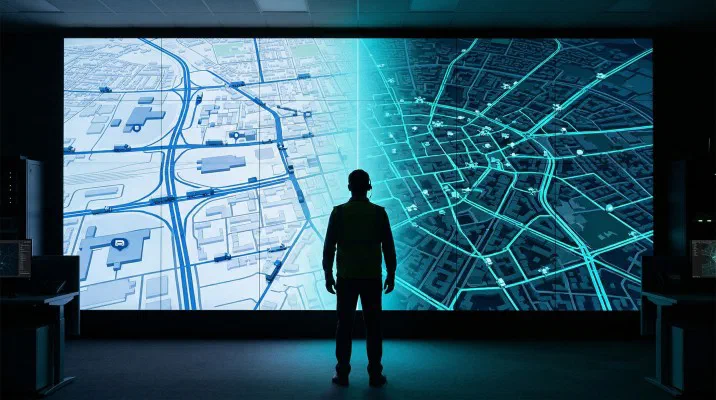
How we unknowingly mapped the world
Niantic built Pokémon GO on augmented reality, a technology that requires a device to understand its precise position in three dimensions, not just on a flat plane. Every time a player pointed their phone at a building or street corner waiting for a creature to appear, they were unknowingly feeding spatial data into the system.
The result is one of the most detailed, street-level 3D maps of inhabited areas ever assembled - fresher and more granular than anything produced by expensive survey vehicles or satellite imaging.
Infrastructure for autonomous mobility is not only being built in laboratories. It is being built every day on the pavements of the cities we walk through.
Niantic is now licensing this map to manufacturers of delivery robots and autonomous vehicles. It is becoming paid infrastructure, much like GPS two decades ago, before anyone understood that satellite navigation would underpin the entire logistics industry.
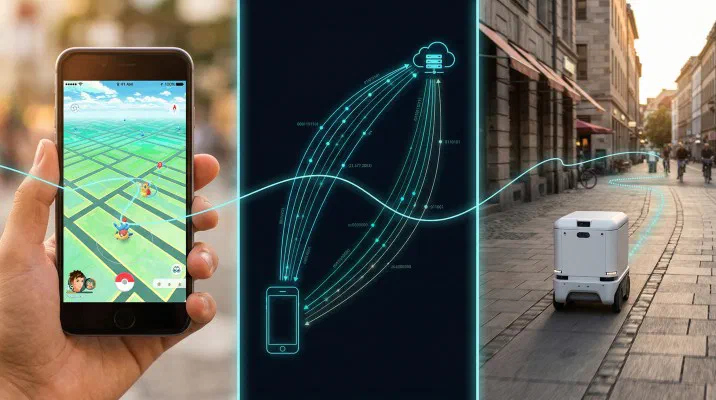
From gaming to logistics: the unexpected connection
Delivery robots need far more than conventional navigation. They need to know the exact width of a pavement, the location of steps, where doorways sit, where cars tend to park. Traditional maps simply do not have this. That is precisely why the Niantic dataset is so valuable to robotics manufacturers.
The final mile of delivery - that last stretch from depot to customer’s door - accounts for close to thirty percent of total delivery costs. Technology companies are targeting this segment because the efficiency gains are largest there. The Pokémon GO story is therefore not a technology curiosity. It is the moment a game became infrastructure for last-mile logistics: a commercial transaction happening right now.
What does this mean for freight forwarders?
New entrants are moving into last-mile delivery who had no connection to logistics a decade ago. Technology firms with spatial data and software capability are building alternative urban delivery networks.
At the same time, customer expectations are shifting. When a consumer gets used to a robot arriving at precisely 14:37 and finding the entrance without any human help, their tolerance for “we’ll deliver between 8:00 and 18:00” drops sharply. That pressure eventually reaches B2B procurement decisions too.
And yet there is an area where human expertise remains genuinely irreplaceable: international and cross-border freight. Customs regulations, tariff structures, regulatory differences between jurisdictions, managing unexpected situations at borders.
These are domains where no spatial map, however precise, provides any advantage. No algorithm calls the customs officer it has known for fifteen years to resolve a documentation issue before it becomes a delay.
DMF Express and the future of logistics
Technology will map the world. Experienced freight forwarders will navigate the complexity of it.
DMF Express follows these developments not out of curiosity but as part of mapping what comes next in our industry. What comes next is a world where physical space is digitally documented to an unprecedented degree. But decisions about customs clearance, transit conditions and crisis management still belong to people who understand them.
The future of logistics is not a contest between people and machines. It is an architecture in which both play the roles that suit their capabilities.
Do you see these trends playing out differently in your segment? Get in touch - we would like to hear your perspective.
Originally published on LinkedIn.