
Our Fleet - 7.2 t Curtain-Side Vehicles
DMF Express owns and operates a fleet of 7.2 t curtain-side (tautliner) vehicles with up to 3 200 kg payload, 37 m³ of load space and room for 15 Euro pallets - plus vetted trailer capacity up to 24 t.
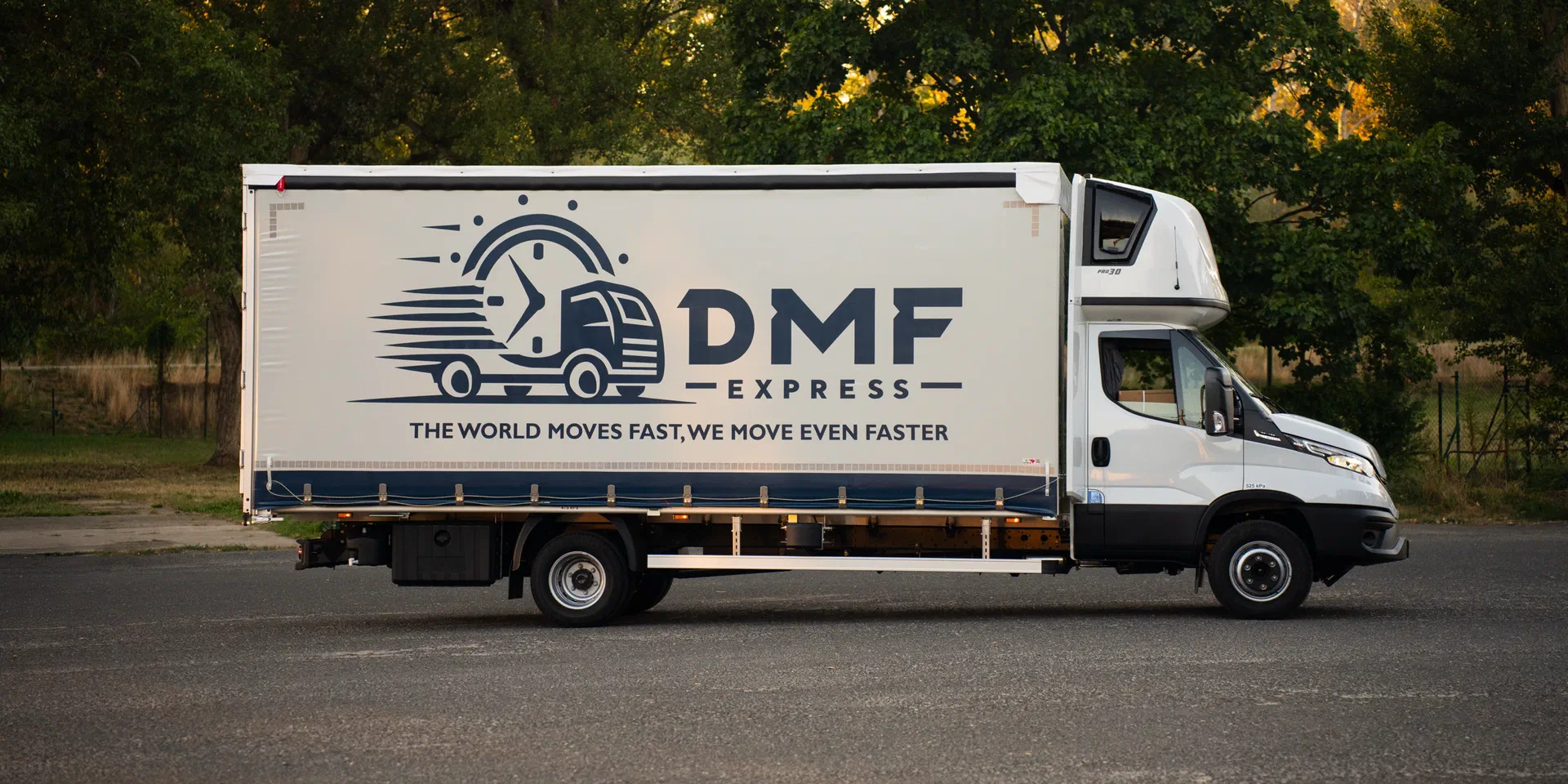
Capacity we control, not capacity we hope for
Most freight forwarders own nothing. They take your booking, search the market, and pass the job to whoever answers. That works fine right up until the moment it does not - a peak week, a bank holiday, a Friday afternoon when every available vehicle is already committed.
DMF Express operates differently. We own and run our own fleet of 7.2 t curtain-side (tautliner) vehicles, and we buy trailer capacity on top of that. So when a load is urgent, there is a vehicle we can actually release, and when a load is too big for our own fleet, there is a network that can take it.
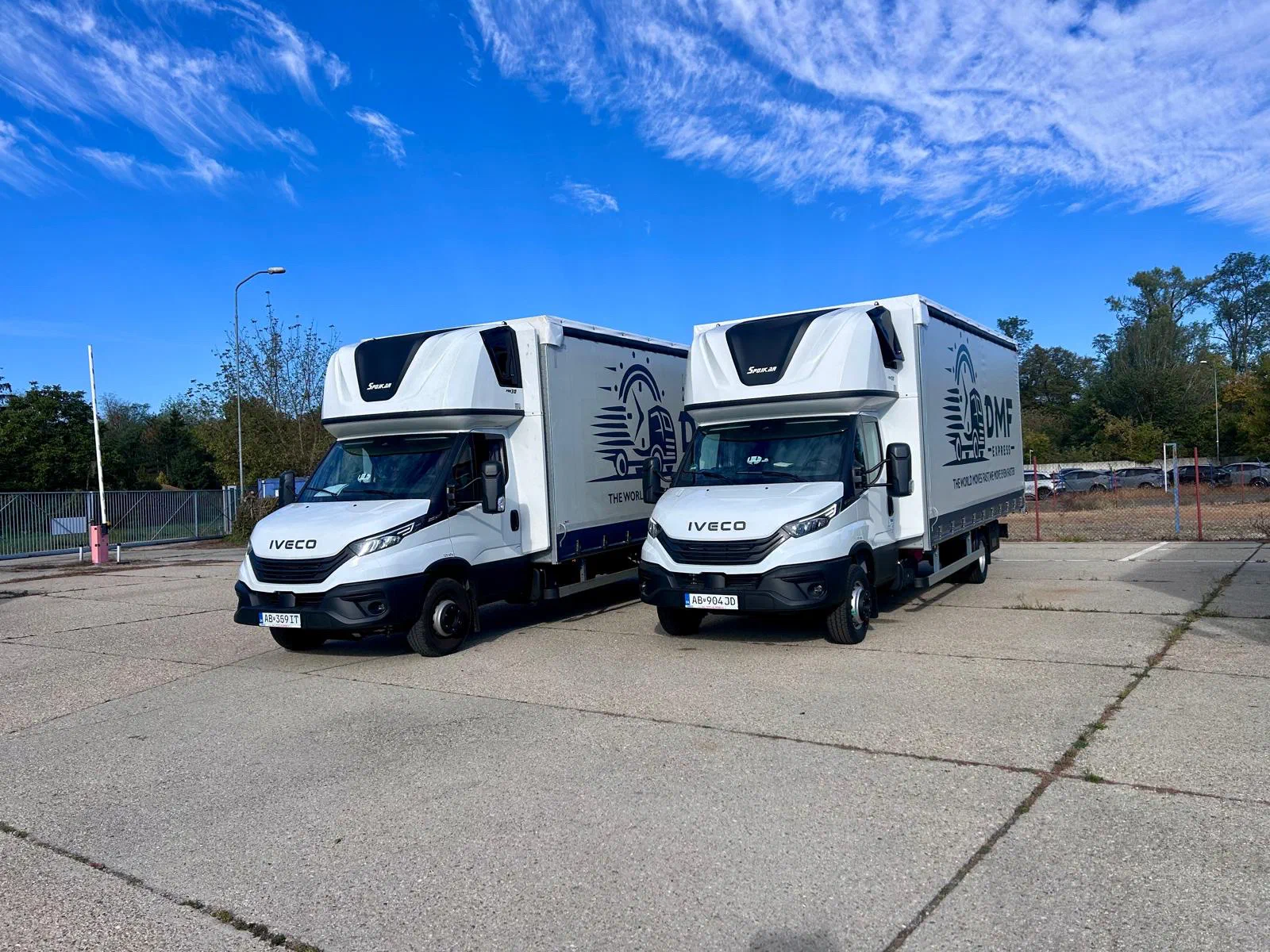
The 7.2 t curtain-side vehicle
The entire own fleet is curtain-side, and that is a deliberate choice rather than an accident of procurement.
Specification
| Parameter | Value |
|---|---|
| Gross vehicle weight | 7.2 t |
| Usable payload | up to 3 200 kg |
| Load space (L × W × H) | 610 × 248 × 245 cm |
| Side loading height | 235 cm |
| Loading volume | 37 m³ |
| Euro pallets | 15 |
| Loading metres | 6.1 LDM |
| Body type | Curtain-side (tautliner), side and top access |
| Emission standard | EURO 6 |
| Tracking | GPS, 24/7 |
| Optional equipment | Tail lift, pallet truck, load bars, anti-slip mats |
Figures are typical for the fleet; the exact configuration is confirmed per vehicle when we assign it to your shipment.
Why curtain-side matters
A box body has one opening: the back. Everything has to go in and come out through it, in order, usually with a forklift working at an angle.
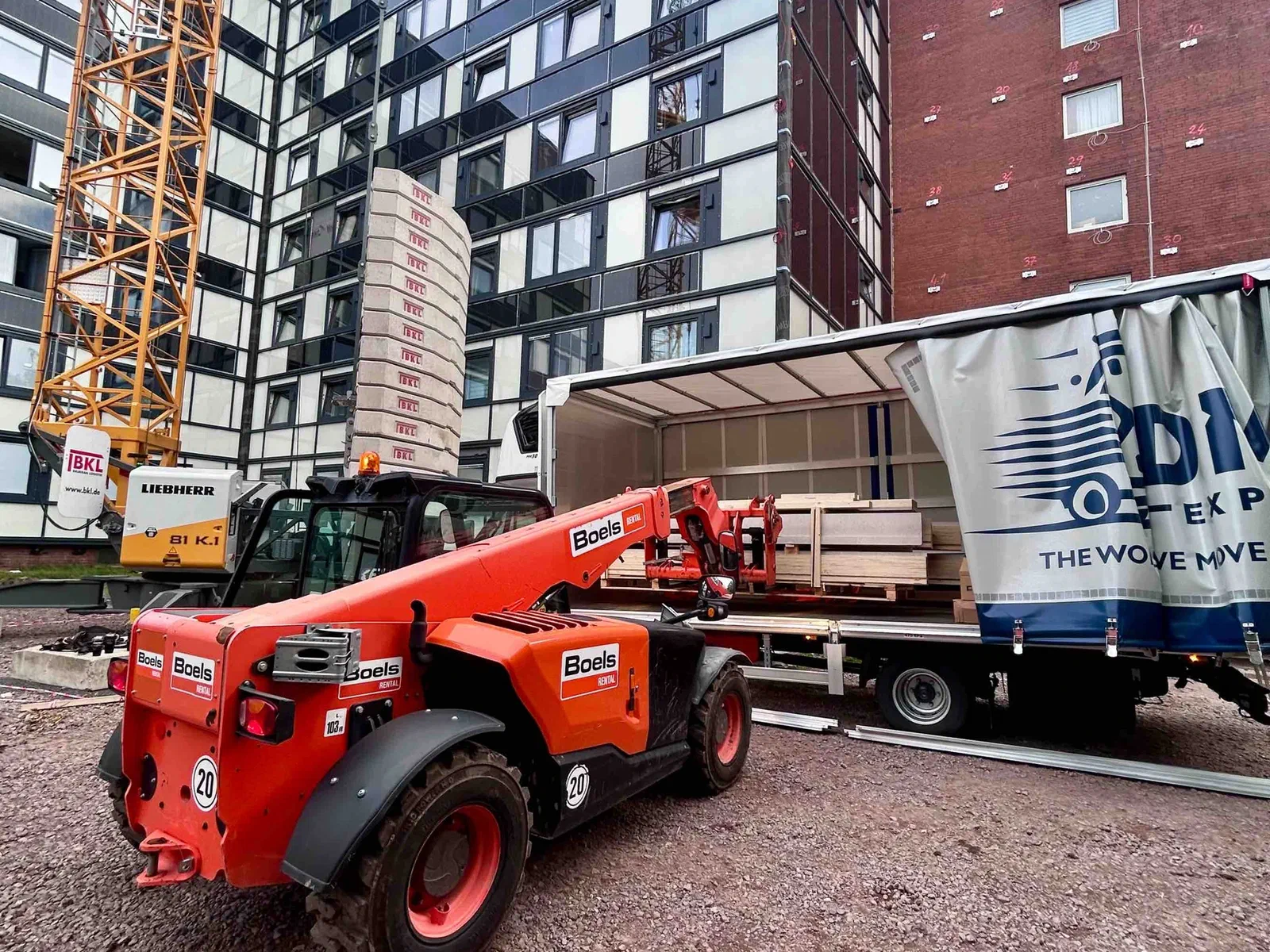
A curtain-side body opens along the entire length of both sides, and the roof can be opened for top loading. In practice that means:
- Forklift access from either side, so loading a 12-pallet consignment takes minutes rather than half an hour.
- Crane and overhead loading for machinery, steel, timber and anything too heavy or awkward to push in from the rear.
- Long items go in sideways instead of being threaded through a door.
- Sites without a ramp stop being a problem - combined with a tail lift, the vehicle is self-sufficient.
- Faster turnaround at both ends, which is what actually protects a delivery window.
What the 7.2 t class is good at
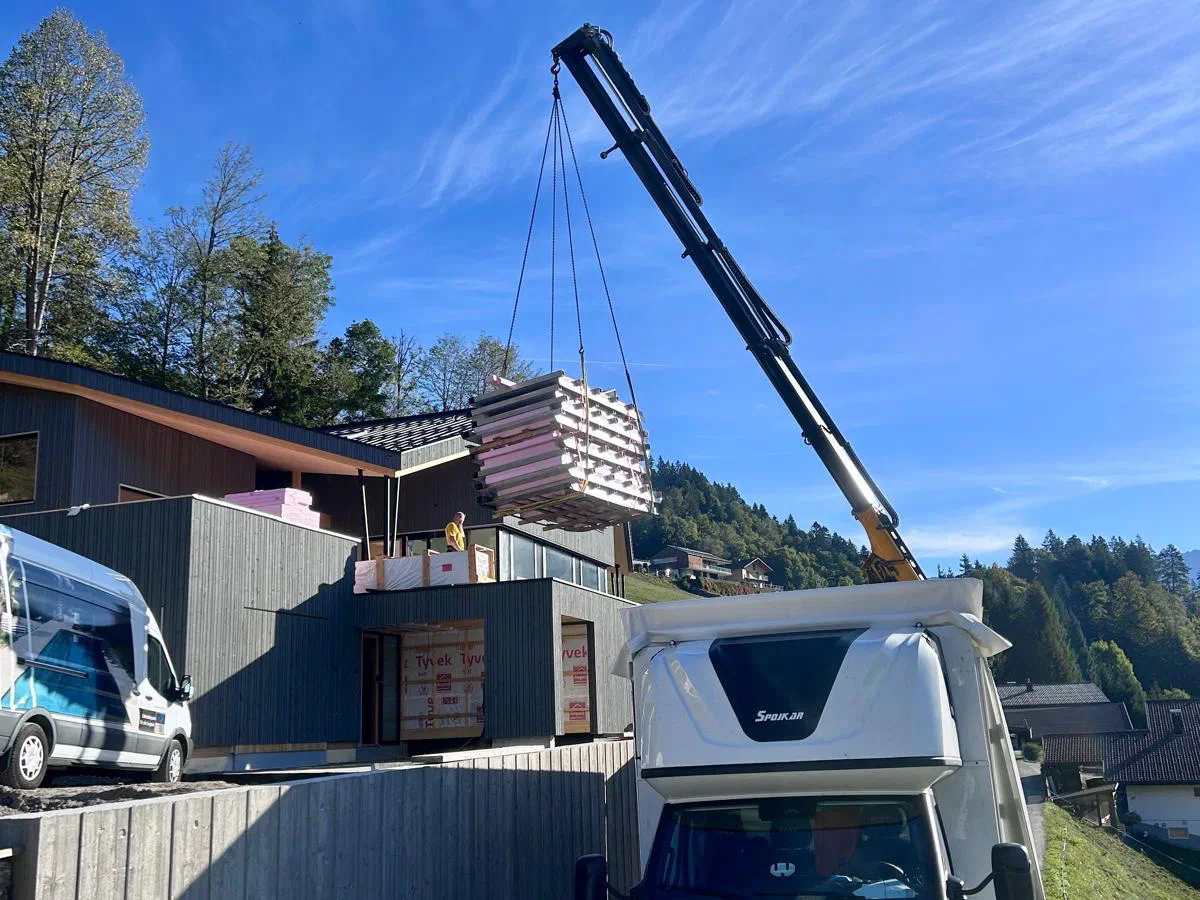
This vehicle class sits in a useful gap. It is far more flexible than a 40 t articulated truck - better urban access, lower weight limits, tighter turning circles, EURO 6 compliance for low-emission zones - while carrying several times what a 3.5 t van can take.
It is the right vehicle when you have:
- 4 to 15 Euro pallets on a European lane,
- a delivery straight into a city centre (Vienna or Munich, for example) or an industrial estate with awkward access,
- an urgent consignment that cannot wait for a trailer to become available,
- a site with no ramp and no forklift,
- cargo that must be loaded from the side or from above.
Beyond our own fleet: up to 24 t
For anything larger, we book from a carrier network we have vetted over more than a decade - licences, CMR liability insurance and ADR certification checked before we book, and a record of actually turning up.
| Vehicle | Payload | Volume | Euro pallets |
|---|---|---|---|
| Caddy | up to 500 kg | - | 1–2 |
| Box van | up to 1 200 kg | - | 5 |
| Curtain-side van | up to 1 000 kg | - | 8–10 |
| Own 7.2 t curtain-side | up to 3.2 t | 37 m³ | 15 |
| Box / rigid truck | up to 12 t | up to 50 m³ | 18–20 |
| Standard tautliner | up to 24 t | up to 92 m³ | 33–34 |
| Mega trailer | up to 24 t | up to 100 m³ | 33–34 |
| Jumbo combination | up to 22 t | up to 120 m³ | 38 |
You never need to know which of these you want. Send the weight, the dimensions and the pallet count, and choosing the vehicle is our job.
Maintenance, compliance and emissions
Our vehicles meet the EURO 6 emission standard, which is both an environmental commitment and a practical one - EURO 6 is the usual threshold for access to low-emission zones in European cities, and it keeps toll costs down on several networks.
Our vehicles carry the environmental stickers for Germany and Austria, so we deliver straight into city centres with low-emission zones - Vienna or Munich, for example.
Servicing is planned rather than reactive, we hold an EU Community licence for international road haulage, drivers are ADR certified, and every vehicle is GPS tracked 24 hours a day. Digital tachograph data and driving-time compliance are monitored continuously, which is why we can tell you honestly at quoting stage whether a transit time is legally drivable.
Equipment on request
Not every job needs it, but when it does, ask at booking rather than at the ramp:
- Tail lift for sites without a ramp or forklift
- Pallet truck on board
- Load bars, blocking and anti-slip mats for cargo securing to EN 12195-1
- Edge protectors and additional lashing straps for fragile or high-stacked loads
- ADR equipment for limited-quantity dangerous goods